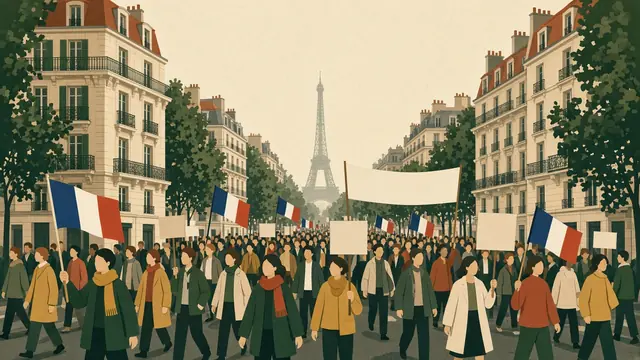
France is seeing some of its worst unrest in years. A high-school protest over run-down schools has turned into nationwide marches over the cost of living.
The root chain
How Rootread connects the dots, in 5 steps.
- 1789
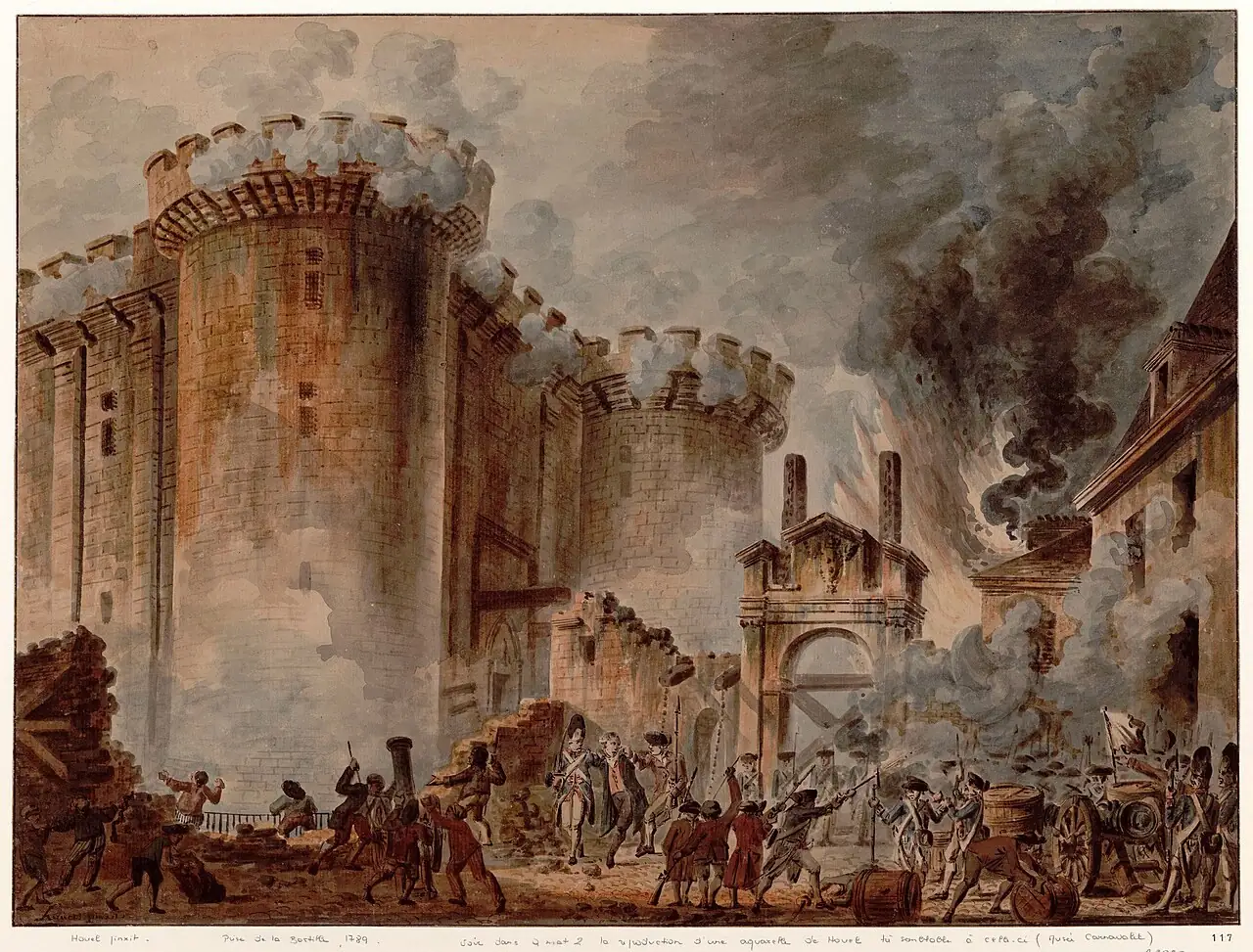
Parisians stormed the Bastille, and protest in the street became part of how France makes its history.8
- 1968
A student revolt grew into a national general strike, a template later movements would reuse.9
- 1995
Weeks of strikes forced the government to drop pension changes, showing that a big enough mobilization can stop a reform.10
- 2018
The yellow vests, organized online without formal leaders, got a planned fuel-tax rise scrapped.11
- 2026
Students protesting run-down schools were joined by anger over fuel prices and calls to revive the yellow vests.12
…which is why this is happening today.
1What's happening
- Since September, students at lycées (high schools, ages 15 to 18) have blocked their schools.1
- They want more teachers and repairs to run-down buildings.2
- On Oct. 17, about 550,000 people marched, by the Interior Ministry's count. Organizers said 800,000.1
- Most marches were peaceful. But shops were looted and Limoges's town hall burned.3
- More than 2,500 people were taken into custody after that weekend, RFI reported on Oct. 20.4 Several cities have curfews.1
How big were the marches?
2Why now
- Fuel costs jumped after a global energy shock.2
- Offers didn't stop it: the government released diesel reserves on Oct. 7 and promised 3,000 extra supply teachers on Oct. 8.23
- Police injuries: a pause on one type of stun grenade was lifted on Oct. 16.5 On Oct. 17, a 17-year-old in Saint-Étienne lost his hand.3 Researcher Oliver Davis told France 24 that images of injured teens drew more people in.6
3How we got here
- 1789France's revolutionary tradition was born on the street, with the storming of the Bastille.8
- 1968A student revolt became a national general strike.9
- 1995Strikes forced the government to drop pension changes.10
- 2018The yellow vests protested a fuel tax. The tax rise was scrapped.11
- 2023Huge marches failed to stop a higher retirement age.13

4Why it matters & what's next
Want the full story, from 1789 to now?
Sources
Today’s news
- The Guardian (Oct 17, 2026): Buildings set ablaze and more than 1,800 arrested as police clash with protesters across France (headline reflects an early count)
- CNBC: France to release diesel reserves as student protests reignite (Oct 8, 2026)
- BBC News: Violent clashes, looting and buildings ablaze in France as more than 1,200 arrested (headline reflects an early count)
- RFI (Oct 20, 2026): curfews, arrests and the protests planned for Oct. 24
- Le Parisien (Oct 16, 2026): the suspended stun grenade cleared for use on Oct. 17 (in French)
- France 24: France faces reckoning with public order policing after violent protest weekend (Oct 19, 2026)
- France-Guyane: L'outre-mer avait sonné l'alarme bien avant l'Hexagone (Oct 6, 2026, in French)
The history
- French Revolution (Wikipedia overview)
- May 68 and Killing of Malik Oussekine, 1986 (Wikipedia)
- 1995 strikes in France (Wikipedia)
- Yellow vests protests (Wikipedia)
- franceinfo (Jan. 31, 2023): Interior Ministry counts of 1.27 million marchers on Jan. 31 and 1.12 million on Jan. 19 (in French)
- 2023 French pension reform strikes and 2005 French riots (Wikipedia)
Every few years, the world watches French streets fill with marchers, barricades, and smoke, and asks the same question: why France, again? Here is our reading: protest in France isn't an interruption of politics. It's one of politics' oldest and most trusted tools. To understand why a fight over run-down school buildings and missing teachers could bring half a million people into the streets in October 2026, you have to go back more than two centuries.
From 1789 to now
Tap a year to explore the roots of today's protests.
1789: The Revolution
Royal debt and high bread prices fed a revolt. Crowds stormed the Bastille on July 14, and July 14 is still France's national holiday.
Read this era in the Long Read →1830–48: Barricades
Three days of street fighting toppled Charles X in 1830. In February 1848, Paris rose again and King Louis-Philippe abdicated.
Read this era in the Long Read →1871: The Commune
Paris governed itself for about two months. The "Bloody Week" that ended it killed an estimated 10,000 to 15,000 people.
Read this era in the Long Read →1968: May ’68
Student protests at Nanterre and the Sorbonne grew into a general strike involving millions of workers.
Read this era in the Long Read →1995: The big strike
Weeks of transport strikes forced the government to drop its most contested pension changes.
Read this era in the Long Read →2018: Yellow vests
A protest over a fuel-tax rise became one of the longest-lived movements in French history. The tax rise was scrapped.
Read this era in the Long Read →2023: Pensions
The Interior Ministry counted more than a million marchers on several days, but the retirement age still rose from 62 to 64.
Read this era in the Long Read →2026: Now
About 550,000 people marched on Oct. 17 by the Interior Ministry's count, joining a high-school movement over run-down schools.
Read this era in the Long Read →A movement that started in the classroom
Start with the present. In late August, teachers and parents at the Lycée du Nord in Mayotte, a French department in the Indian Ocean, began blockading a school that, according to the regional paper France-Guyane, was taking in about 2,300 students in buildings designed for 900.1 In early September, students at the Lycée Félix-Éboué in Cayenne, French Guiana, presented a list of seventeen complaints, from classrooms without fans to unsanitary toilets and an expensive, overcrowded canteen.1
By the second half of September, the movement had reached mainland France, taking off in high schools in the poorer suburbs of Paris, where the grievances were familiar: teachers absent and never replaced, run-down buildings, too few staff. Blockades spread from school to school, helped along by social media. So did images of the police response. Teenagers were seriously injured by crowd-control weapons. On October 7, the interior minister suspended one type of stun grenade at school protests after a 15-year-old's hand was blown off.2 The suspension was lifted on October 16, ahead of the October 17 marches, when a 17-year-old in Saint-Étienne lost his hand to a grenade.34
A second spark: fuel
Meanwhile, a second current of anger was building. Fuel prices had jumped after a global energy price surge that CNBC tied to the U.S.-Iran war.5 Through September, calls to revive the gilets jaunes (yellow vests) circulated online. The government tried concessions on both fronts. On October 7, Prime Minister Sébastien Lecornu announced a release of strategic diesel reserves and said in a televised address that young people's anger "did not come out of nowhere."5 On October 8, Education Minister Édouard Geffray promised 3,000 extra supply teachers.4
October 17
On October 17, the currents merged. Students, unions, people answering online calls to revive the yellow vests, and activists marched across France: about 550,000 people by the Interior Ministry's count, and 800,000 by organizers'.2 Most of the marching was peaceful; by nightfall it wasn't. Looters hit shops and the 19th-century town hall in Limoges burned.4 By October 20, more than 2,500 people had been taken into custody since the weekend (up from early counts of 1,200 and 1,800), and 123 had been jailed, RFI reported.6 Prefects had ordered local curfews in several cities. More protests are called for October 24, and a presidential election is coming in April.
None of these ingredients is new to France: students in the vanguard, a fight over the cost of living, accusations of police brutality, a government forced onto the back foot. They have been combined many times before.
The original: a revolution about bread and dignity
The French Revolution is the founding story of modern France, and the founding story of French protest. By 1789 the monarchy was deeply in debt, and a poor harvest had pushed up the price of bread, the staple food for ordinary Parisians. King Louis XVI summoned the Estates-General, an assembly that hadn't met since 1614, to deal with the financial crisis. The representatives of the commoners, the Third Estate, broke away and declared themselves a National Assembly, swearing in the famous Tennis Court Oath not to disband until France had a constitution.
Then the street took over
On July 14, 1789, crowds stormed the Bastille, a fortress and prison that symbolized royal power. In August came the Declaration of the Rights of Man and of the Citizen. And in October, thousands of Parisians, many of them women angry about the price and scarcity of bread, marched to the palace at Versailles and forced the royal family to return to Paris.8
Two lessons from 1789 run straight through French history. First, the price of daily necessities can be political dynamite. Second, the people in the street can be legitimate actors who make history, not just a mob. A later revolutionary declaration, in 1793, went so far as to call insurrection, when a government violates the people's rights, "the most sacred of rights."8 July 14 is still France's national holiday.
Today’s echoFuel prices jumped after a global energy price surge, and the government released diesel reserves to ease the cost of living.5
Barricades, again and again
The Revolution gave way to Napoleon, and after his fall the old Bourbon monarchy returned. But the habit of revolt didn't go away. In July 1830, King Charles X issued ordinances that suspended press freedom and dissolved the newly elected parliament. Paris answered with three days of street fighting, the "Three Glorious Days," and Charles X was gone.9 Eugène Delacroix's painting Liberty Leading the People, with its bare-breasted Liberty carrying the tricolor over a barricade, was made in response to that uprising and remains one of the most famous images of French protest.10
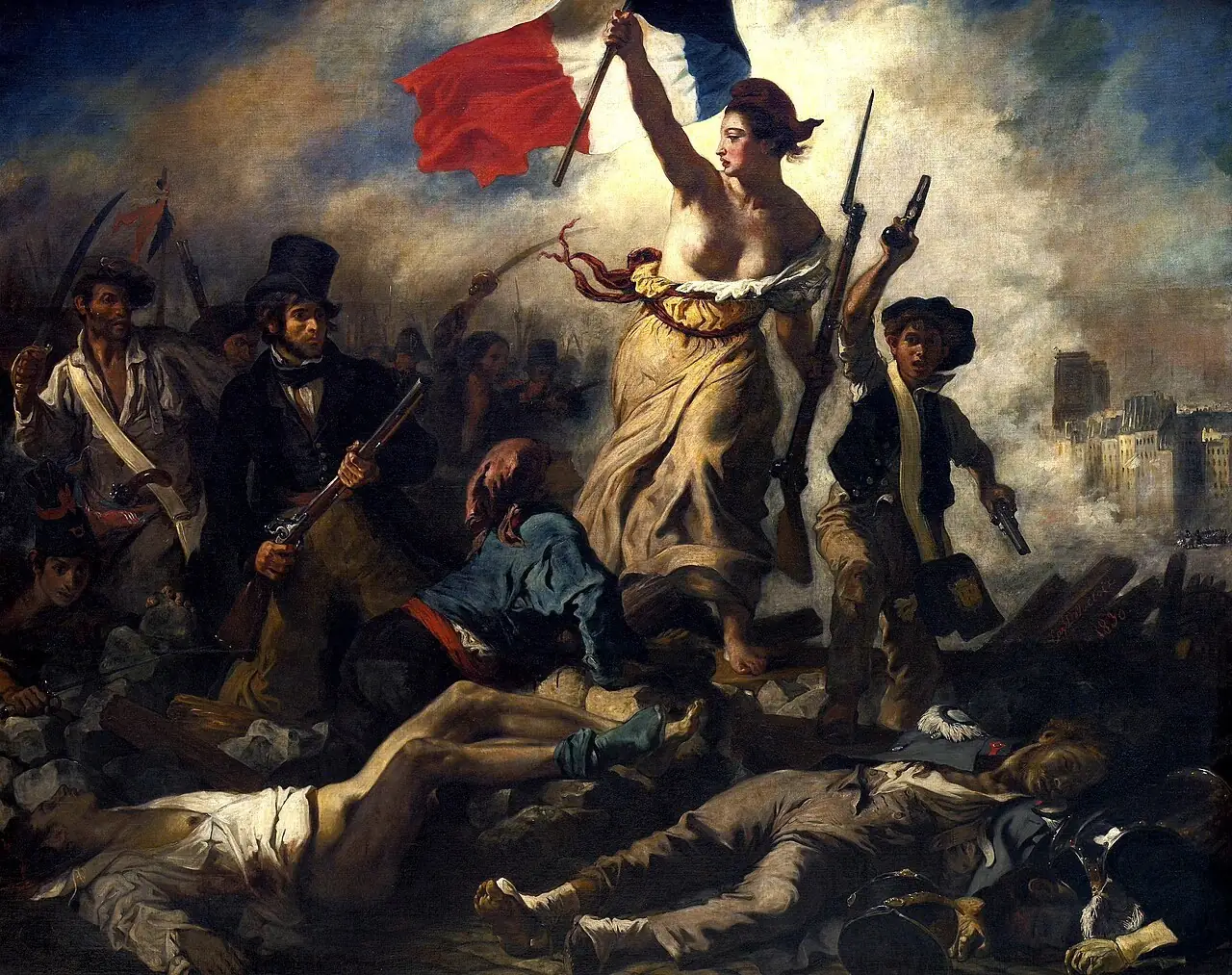

The new king, Louis-Philippe, lasted until 1848. When his government banned the political "banquets" reformers used to get around restrictions on public meetings, Parisians took to the barricades again in February 1848. Louis-Philippe abdicated, and the Second Republic was proclaimed, bringing in voting rights for all adult men.9 It was part of a wave of revolutions across Europe that year.
The June Days
The February victory was followed by a bitter lesson. That June, after the government shut down the National Workshops that had given jobs to unemployed Parisians, workers rose again. The army crushed the "June Days" uprising, and thousands were killed. The pattern of 1848 still echoes: a coalition that wins together in the street can split apart over economic questions, and the state can turn overwhelming force against the people who helped bring it to power.
Today’s echoStudents, union members and people answering online calls to revive the yellow vests marched together on Oct. 17: about 550,000 by the Interior Ministry's count, 800,000 by the CGT union's.42
The Paris Commune: the city governs itself
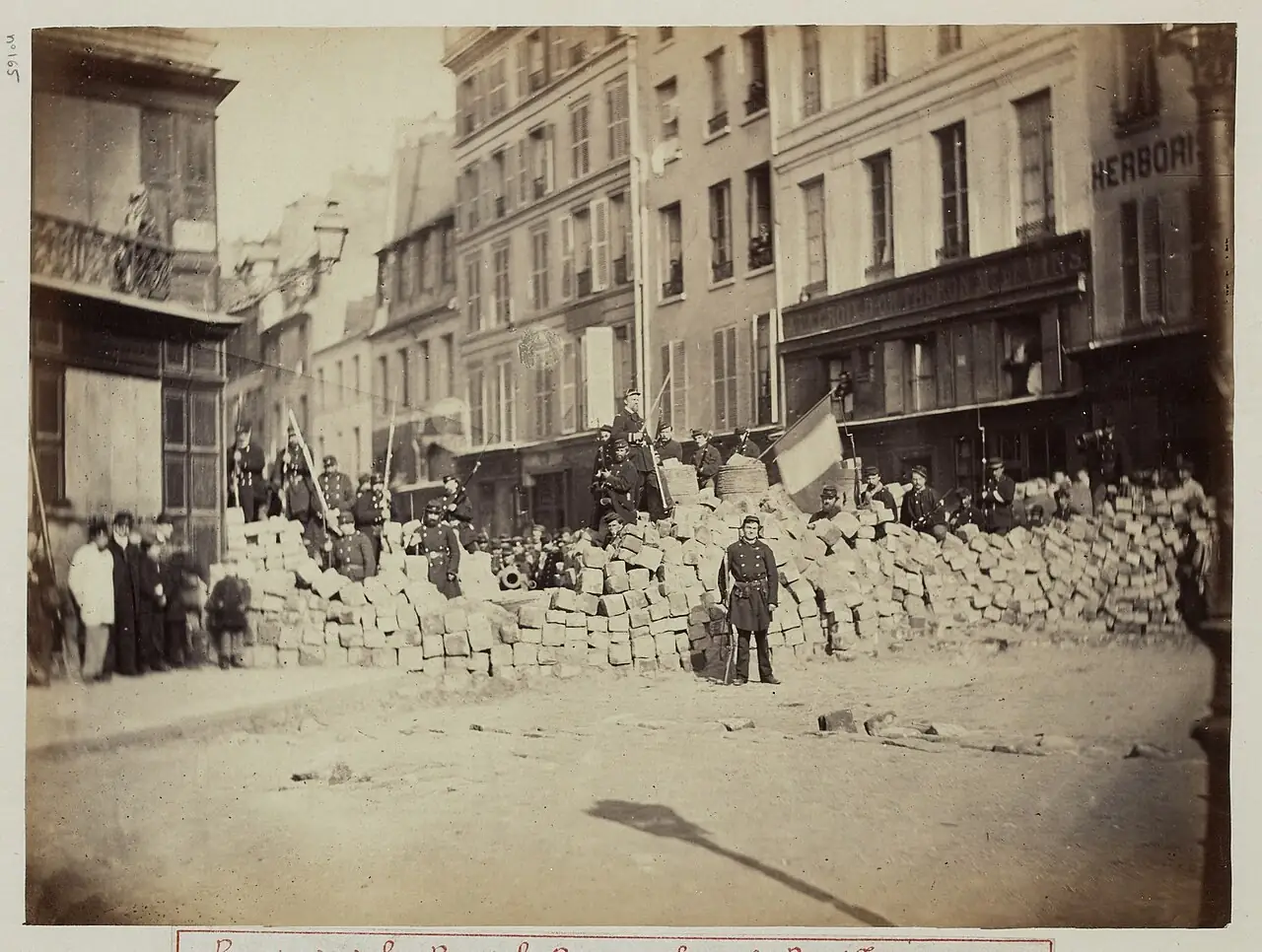
In 1870 and 1871, France lost a war to Prussia, and Paris endured a punishing siege. When the national government sent troops on March 18, 1871 to seize cannons held by the Parisian National Guard, the city rose up, and the government withdrew to Versailles. For about two months, Paris governed itself as the Commune, a radical experiment that, among other measures, separated church and state and banned night work in bakeries.11

Bloody Week
It ended in horror. In late May, during what became known as the "Bloody Week," government troops retook the city street by street. An estimated 10,000 to 15,000 people were killed, though estimates vary. On the last day, about 150 Communards were lined up and shot at the Mur des Fédérés (the Communards' Wall) in Père Lachaise cemetery, which is still a site of left-wing commemoration today.
The Commune left France with a split memory that persists. To some it is a heroic moment of working-class self-government; to others it is a warning about what happens when order collapses. That double reading, protest as liberation and protest as chaos, frames almost every French debate about street politics, including the one going on this week.
You can see this todaywhen leaders read the same marches in opposite ways: Prime Minister Lecornu said some groups were using them as a "warm-up" for the election, while Mélenchon accused police of "unleashing" on protesters.4
May '68: when students lit the fuse
If the current movement has one clear ancestor, it is May 1968, because that one, too, started with young people in education. Student unrest at the university campus in Nanterre, just outside Paris, spread to the Sorbonne in the Latin Quarter. When police moved in, students built barricades from paving stones, and the night of May 10–11 saw violent clashes. Public outrage at the police crackdown fueled further mobilization.
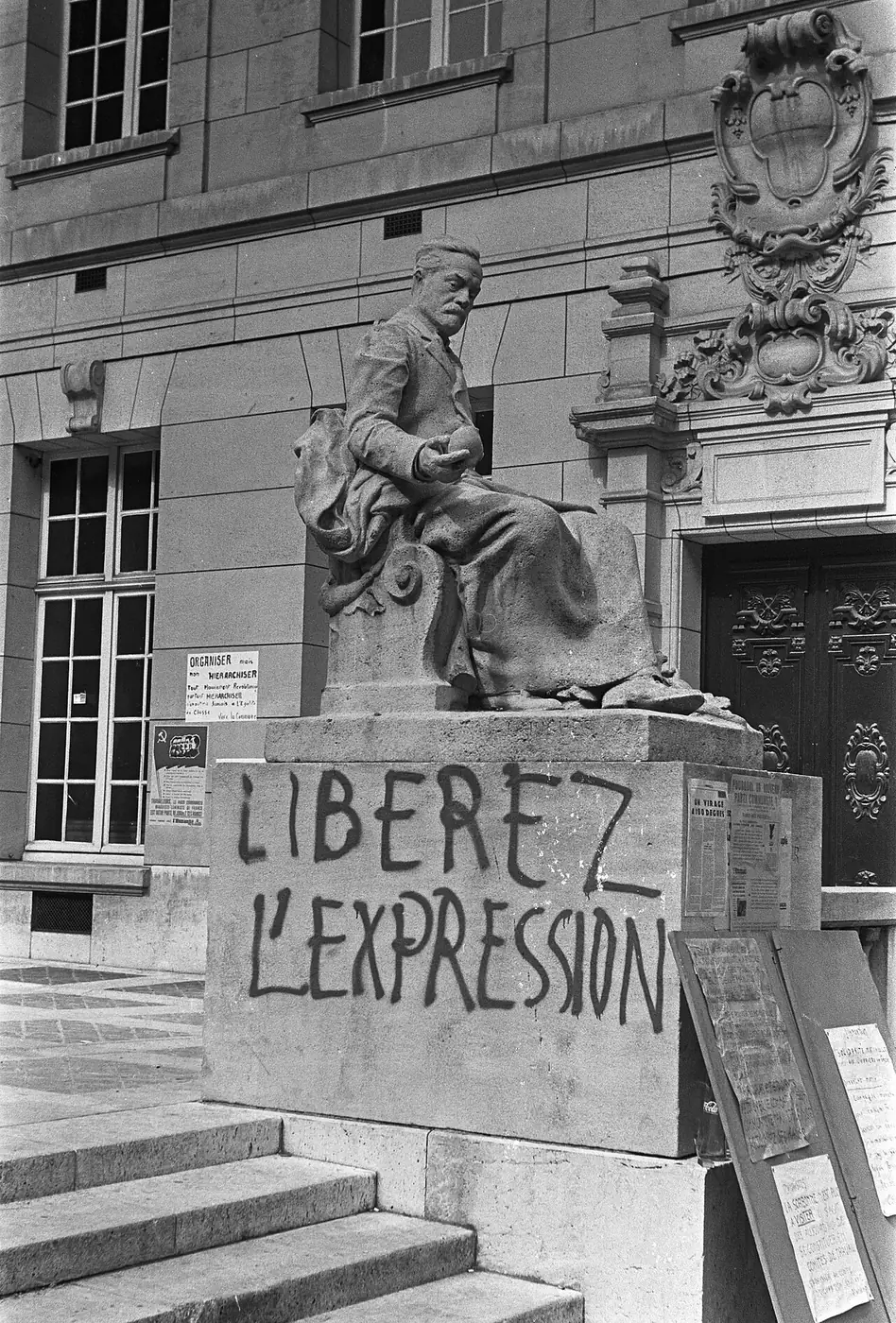

The workers join in
What happened next is the part that still haunts French governments: the workers joined in. Unions called a strike, and it snowballed into a general strike involving millions of workers, with factories occupied and the country brought to a near standstill.12 Slogans like "Beneath the paving stones, the beach!" and "It is forbidden to forbid" became part of French culture.
The state survived. President Charles de Gaulle dissolved parliament, and his supporters won a big victory in the June elections. But the government also negotiated the Grenelle agreements with unions, including a large rise in the minimum wage, and de Gaulle resigned the following year after losing a referendum. May '68 left behind a template that later movements would echo.
That template has been reused. In 1986, students protested against a university reform bill; after a 22-year-old student, Malik Oussekine, who was not taking part in the protest, died following a police beating in Paris, the bill was withdrawn.12 Two decades later, in 2006, student and union protests forced the government to scrap a contested youth employment contract.
Today’s echoOn Oct. 17 a young protester in Saint-Étienne lost his hand, and researcher Oliver Davis told France 24 that images of injured teenagers drew more people in.47
1995: the strike that froze the country
In November 1995, Prime Minister Alain Juppé unveiled a plan to overhaul social security, including the special pension arrangements of public-sector workers such as railway employees. The response was weeks of strikes in late November and December that paralyzed public transport. Parisians walked, cycled, and hitchhiked to work, and public support stayed largely with the strikers anyway.
The government gave way on the most contested parts, including the pension changes for the special regimes.13 The lesson many in France drew from 1995 was simple and powerful: a big enough, sustained enough mobilization can stop a reform. That expectation has shaped every major fight over the welfare state since.
Today’s echoThe government offered concessions, diesel reserves on Oct. 7 and 3,000 extra supply teachers on Oct. 8, and the protests went on.54
The yellow vests: protest without leaders
The movement that many of today's protesters are trying to revive began on November 17, 2018, over a planned increase in fuel taxes.14 Its symbol was the high-visibility yellow vest every French driver is required to keep in the car. Organized largely through Facebook, not unions or parties, the gilets jaunes occupied traffic roundabouts across rural and small-town France and staged weekly Saturday protests in Paris and other cities.
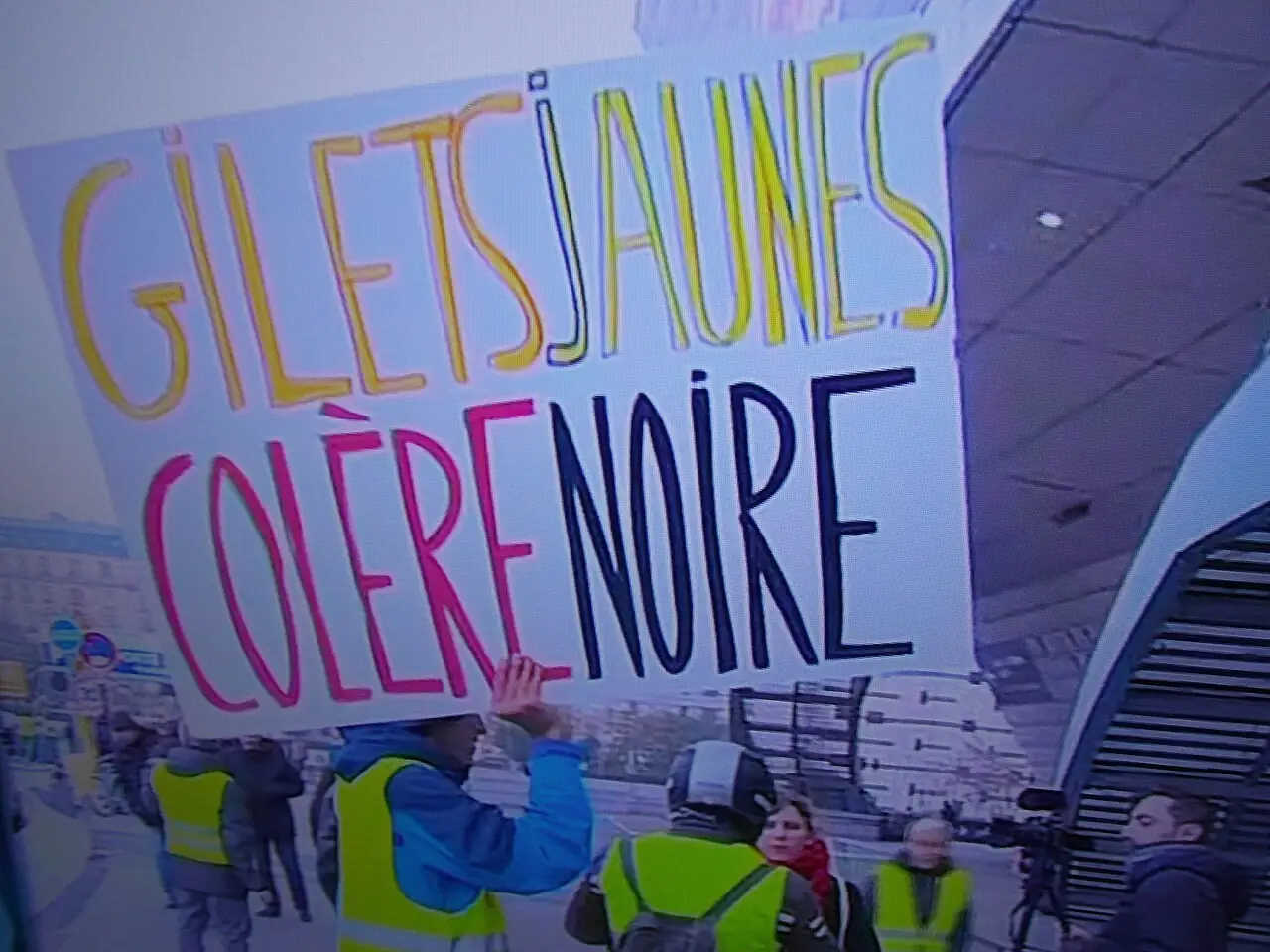

The yellow vests were different from earlier movements. They were largely leaderless, deeply suspicious of political parties and unions, and rooted in a sense that people outside big cities who depended on their cars were paying for policies designed by and for metropolitan elites. Their grievances quickly widened from fuel to taxes, wages, and the perceived arrogance of President Macron.
Injuries and concessions
Some protests turned destructive, including the vandalism of the Arc de Triomphe in December 2018. And the police response became a lasting controversy: many protesters were seriously injured by rubber-bullet launchers and grenades, including eye injuries. Within weeks, Macron scrapped the fuel-tax increase and announced measures to boost the incomes of low-paid workers, then launched a "Great National Debate" in 2019.14 The movement became, as the BBC notes, one of the longest-lived protest movements in French history, and its playbook of social-media mobilization, no formal leaders, and Saturday protests is visible again in 2026.
Today’s echoCalls on social media to revive the gilets jaunes came before the Oct. 17 marches, and yellow vest representatives have called more protests for Saturday, Oct. 24.26
The pension fight: when the street lost
In 2023, the old script didn't work. Macron's government set out to raise the minimum retirement age from 62 to 64. France's unions, normally divided, united against it and organized months of strikes and marches; on several days, even the Interior Ministry counted more than a million demonstrators nationwide. Opinion polls showed most of the public opposed the reform.
How big were the marches?
In March, facing an uncertain vote in parliament, the government used Article 49.3 of the constitution to push the bill through without a vote. That triggered angrier, more spontaneous protests. But the law survived a no-confidence vote, the Constitutional Council upheld its core, and it was signed into law.16
A turning point
For many French people, 2023 was a turning point. Huge, orderly, union-led protest had been tried and had failed to stop the reform. Months later, in June 2023, the police killing of a 17-year-old, Nahel Merzouk, during a traffic stop in Nanterre set off days of riots in suburbs across France, a reminder of a separate, long-running anger over policing in poorer neighborhoods. That anger had exploded before, too, in the 2005 riots, when the government declared a state of emergency that allowed local curfews.16
Today’s echoThe open question is whether the government holds firm, as it did in 2023, or backs down. More protests are called for Oct. 24.6
How it all connects
Look at October 2026 through that history and the pieces fall into place.
Students as the spark. From 1968 to 1986 to 2006, French governments have learned that student movements can be both sympathetic and contagious. When young people are hurt by police, as when 22-year-old student Malik Oussekine died after a police beating in 1986, and as with injured teenagers this autumn, protest movements have often grown. Oliver Davis, a policing researcher at University College Cork quoted by France 24, argues that images of injured teenagers drew more people into this year's protests.7
The cost of living as fuel. From the bread marchers of 1789 to the yellow vests of 2018, the price of daily essentials has repeatedly turned private frustration into public anger. This year, a jump in fuel prices handed the student movement a much bigger coalition.
The policing argument. France's riot police model, built around specialized units like the CRS, created in 1944 at the end of the war, has been criticized by researchers such as Oliver Davis as more militarized and confrontational than riot police in most of Europe.7 Debates about rubber-bullet launchers and grenades date back years and grew sharply during the yellow vest protests. This week's local curfews recall 2005, but no state of emergency has been declared this time; in 2005 the government went further and declared one.
A crisis of trust. After 2023, many French people concluded that peaceful mass marches don't move the government. Leaderless, social-media-driven mobilization of the yellow vest kind fills that vacuum, but it is harder to negotiate with and harder to control. With Macron unable to run again in April 2027 and polls pointing to a contest between the far right's Marine Le Pen and the hard left's Jean-Luc Mélenchon4, every side is reading the protests through the lens of the election.
And then there is the old double memory of the Commune: is this the people making legitimate demands, or a collapse of order? Political leaders are already answering that question in opposite ways. Lecornu says some groups are using the protests as a "warm-up" for the election, while Mélenchon blames the government's policing.4 Many of the people on the streets, like the young marchers who told the BBC they were "pacifists" trying to "make things change," say they want classrooms with teachers in them, decent public services and a cost of living they can manage.
Whether this becomes another 1995, a government retreat, or another 2023, a government that holds firm, is the question for the coming weeks. But it won't be the first time France has argued it out in the street. In our reading, it's one of the most French things the country can do.
This is a developing story. The current-events sections reflect reporting available as of October 21, 2026, and figures such as arrest counts have changed as authorities update them.
Sources
Today’s news
- France-Guyane: L'outre-mer avait sonné l'alarme bien avant l'Hexagone (Oct 6, 2026, in French)
- The Guardian (Oct 17, 2026): Buildings set ablaze and more than 1,800 arrested as police clash with protesters across France (headline reflects an early count)
- Le Parisien (Oct 16, 2026): the suspended stun grenade cleared for use on Oct. 17 (in French)
- BBC News: Violent clashes, looting and buildings ablaze in France as more than 1,200 arrested (headline reflects an early count)
- CNBC: France to release diesel reserves as student protests reignite (Oct 8, 2026)
- RFI (Oct 20, 2026): curfews, arrests and the protests planned for Oct. 24
- France 24: France faces reckoning with public order policing after violent protest weekend (Oct 19, 2026)
The history
- French Revolution (Wikipedia overview)
- July Revolution of 1830 and French Revolution of 1848 (Wikipedia)
- Liberty Leading the People (Wikipedia)
- Paris Commune (Wikipedia)
- May 68 and Killing of Malik Oussekine, 1986 (Wikipedia)
- 1995 strikes in France (Wikipedia)
- Yellow vests protests (Wikipedia)
- franceinfo (Jan. 31, 2023): Interior Ministry counts of 1.27 million marchers on Jan. 31 and 1.12 million on Jan. 19 (in French)
- 2023 French pension reform strikes and 2005 French riots (Wikipedia)
Short on time? Get it in 90 seconds.