

How a 1951 oil fight led to today’s battle over the Strait of Hormuz
Ships are under frequent attack, and a U.S. blockade of Iran’s ports is in force. Oil flows through the strait have fallen to about two-thirds of pre-war levels by one tracker’s count, and U.S. gasoline is up about $1.35 a gallon since February. The dispute began with a 1951 fight over Iran’s oil.
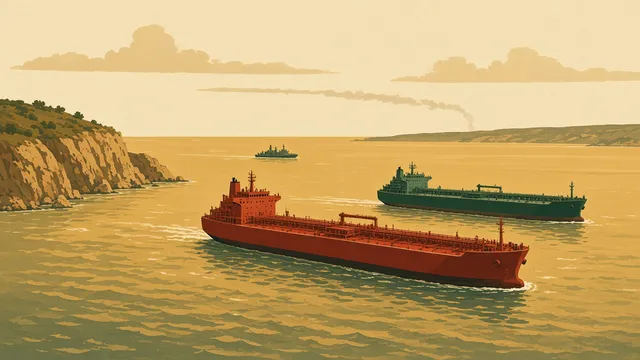
The U.S. and Iran are each using the as leverage in a war that began in February. Traffic through the waterway, a key route for the world’s oil, is moving at reduced levels, with frequent attacks on ships.
A quick timeline, from then to now
Seven moments that explain the fight over the strait.
- 1951
Iran nationalized the British-owned company that controlled its oil. Britain answered with an embargo and a naval show of force.
Washington also feared that a weakened Iran could drift toward the Soviet Union. - 1953
The U.S. and Britain helped overthrow Iran’s elected prime minister, and the Shah returned to power.
The U.S. backed the Shah for the next 25 years. - 1979–81
A revolution toppled the Shah, and students held Americans hostage for 444 days. The two countries cut ties.
In 1980, Iraq invaded Iran. - 1987–88
In the last two years of the Iran-Iraq “Tanker War,” which began in 1984, the U.S. Navy escorted tankers through the Gulf and fought Iranian forces. A U.S. cruiser shot down an Iranian airliner, killing all 290 aboard. The U.S. called it a mistake; Iran called it deliberate.
After 1988, the dispute shifted to Iran’s nuclear program. - 2015–21
A 2015 deal capped Iran’s enrichment. The U.S. quit it in 2018, and by 2021 Iran was enriching uranium to 60%.
On June 13, 2025, Israel attacked Iran. - 2025
During the 12-day war that followed, the U.S. bombed three Iranian nuclear sites. U.N. inspectors haven’t been able to check those sites since.
On Feb. 28, 2026, U.S. and Israeli forces struck Iran. - 2026
Iran answered by attacking ships, and the U.S. blockaded Iran’s ports. A ceasefire and a June deal both fell apart.
Iran wants the blockade and sanctions lifted first. The U.S. wants nuclear limits first.
1What's happening
- , a British military office to which ships report attacks, confirmed at least 12 ships attacked in the week ending Oct. 16. The ship-tracking firm Kpler put oil flows at about 68% of its pre-war baseline.
- Iran says the strait is closed to ships that don’t coordinate with it. , which runs American forces in the Middle East, says the U.S. and its partners control it.
- A U.S. naval of Iran’s ports has been in force since July 14.
2Why now
3Why it matters & what's next
- The strait is a : before the war, about 20 million barrels of oil a day passed through it, about a fifth of world consumption, the U.S. Energy Information Administration says.
- Regular gasoline averaged $4.28 a gallon in the week of Oct. 19, up from $2.94 just before the war, and accounted for more than half of September’s monthly rise in . The Fed, which raised rates in September, makes its next rate decision on Oct. 28. That matters for borrowers: most credit cards are tied to the , which moves with the Fed’s rate.
- Iran wants the blockade and oil lifted first. The U.S. wants nuclear limits first.
- Israel votes on Oct. 27, and the U.S. midterms are Nov. 3. Iranian officials told Reuters they see little chance of a breakthrough before the U.S. vote.
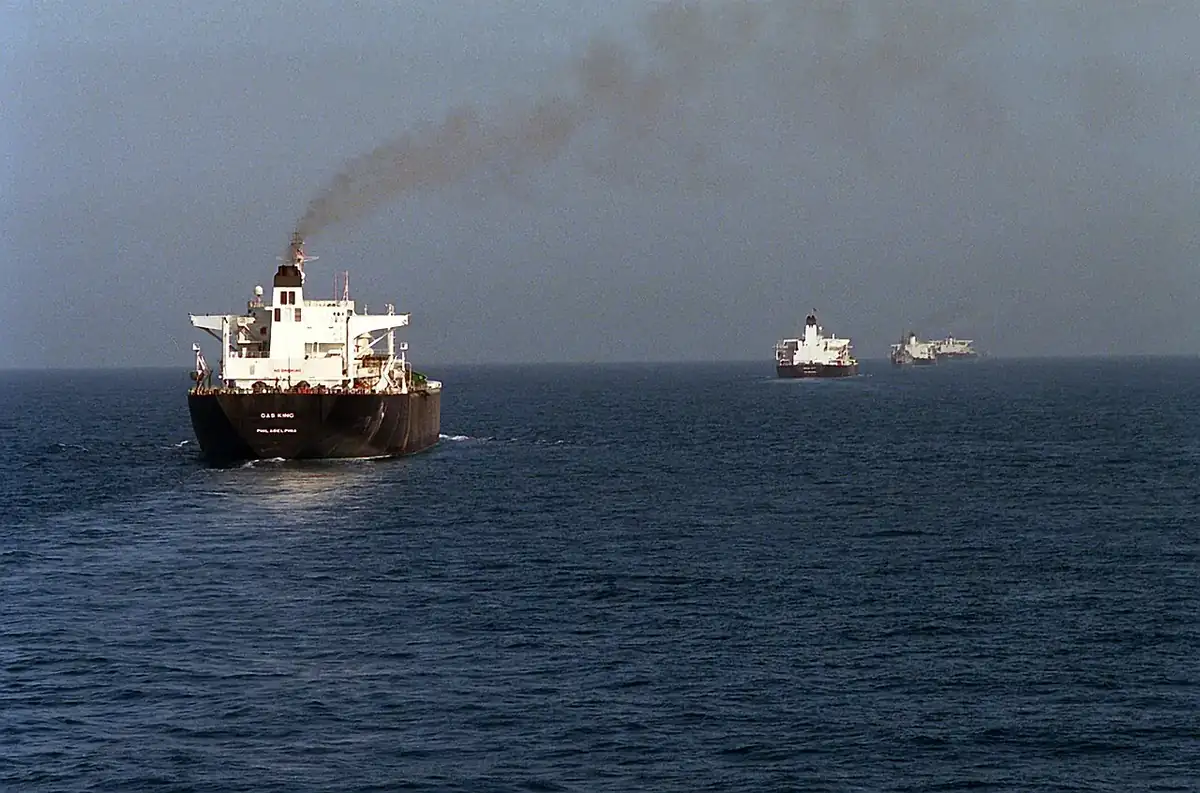
Want the full story, from 1951 to now?



Sources
Today’s news
- Congressional Research Service: U.S. Conflict with Iran (R48887), updated Sept. 18, 2026 ↩︎
- Al Jazeera (Oct. 17, 2026): the U.S. and Iran both claim control of the strait as ships are attacked ↩︎
- Fox News (Oct. 17, 2026): CENTCOM on ship transits and attacks in the strait ↩︎
- The National (Oct. 21, 2026): Araghchi on the strait, the talks and reported U.S. military plans ↩︎
- U.S. Energy Information Administration: Amid regional conflict, the Strait of Hormuz remains critical oil chokepoint (June 16, 2025) ↩︎
- U.S. Energy Information Administration: Weekly U.S. Regular All Formulations Retail Gasoline Prices (dollars per gallon), release of Oct. 20, 2026 ↩︎
- U.S. Bureau of Labor Statistics: Consumer Price Index, September 2026 (released Oct. 14, 2026) ↩︎
- Federal Reserve: FOMC statement (Sept. 16, 2026) ↩︎
- CNBC: Markets expect the Fed to hold rates in October. Kevin Warsh could surprise them (Oct. 16, 2026) ↩︎
- Consumer Financial Protection Bureau: The Consumer Credit Card Market, Report to Congress (December 2025) ↩︎
- Federal Reserve: H.15 Selected Interest Rates (Oct. 20, 2026 release) ↩︎
- Reuters via The Business Standard (Oct. 19, 2026): Iran’s proposal to reopen the strait ↩︎
- Reuters via CNA (Oct. 7, 2026): Vance on Iran’s enrichment ↩︎
- Fox News live blog (Oct. 19–20, 2026), citing IRNA and Reuters: the war, the talks and Israel’s election ↩︎
The history
- U.S. State Department, Office of the Historian: Foreign Relations of the United States, 1952–1954, Vol. X, Iran, Document 15 (Editorial Note) ↩︎
- National Security Archive: “Zendebad, Shah!” The Central Intelligence Agency and the Fall of Iranian Prime Minister Mohammad Mossadeq, August 1953, by Scott A. Koch, CIA History Staff (1998; declassified 2017) ↩︎
- National Security Archive: CIA Confirms Role in 1953 Iran Coup, Electronic Briefing Book No. 435 (Aug. 19, 2013) ↩︎
- National Archives: 444 Days: Selected Records Concerning the Iran Hostage Crisis, 1979–1981 ↩︎
- U.S. State Department, Office of the Historian: Iran (country page) ↩︎
- Naval History and Heritage Command: H-Gram 018-1, “No Higher Honor: The Road to Operation Praying Mantis” (April 2018) ↩︎
- Naval History and Heritage Command: Operation Praying Mantis ↩︎
- U.S. Institute of Peace, The Iran Primer: Timeline of U.S.-Iran naval encounters (Aug. 29, 2016) ↩︎
- U.S. State Department (2009–2017 archive): Joint Comprehensive Plan of Action ↩︎
- White House (2017–2021 archive): President Donald J. Trump is Ending United States Participation in an Unacceptable Iran Deal (May 8, 2018) ↩︎
- Reuters: IAEA confirms Iran has started enriching uranium to 60% purity (April 17, 2021) ↩︎
- Congressional Research Service: U.S. Strikes on Nuclear Sites in Iran (IN12571, June 23, 2025) ↩︎
- Federal Reserve History: Oil Shock of 1978–79 and Recession of 1981–82
The is a narrow passage between Iran and Oman, and before this year’s war about a fifth of the oil the world uses passed through it. Control of the strait is now the main issue in talks to end a U.S.-Israeli war with Iran that is nearly eight months old, and a major reason oil has traded near $110 a barrel this week. The dispute between Washington and Tehran began with a fight over Iran’s oil in 1951.
From 1951 to now
Tap a year to see how the fight over the strait took shape.
1951: Oil nationalized
Iran’s parliament voted to nationalize the British-owned Anglo-Iranian Oil Company. Britain answered with an embargo and a naval show of force, and Iran’s oil sales gradually stopped.
Jump to this era ↓1953: The coup
The U.S. and Britain helped overthrow Prime Minister Mohammad Mosaddeq, and the Shah returned to power. CIA documents published in 2013 acknowledged the agency’s role.
Jump to this era ↓1979–81: Revolution and hostages
The Shah fled, Iran became an Islamic Republic, and students held Americans hostage at the U.S. Embassy for 444 days. The U.S. cut ties in April 1980.
Jump to this era ↓1984–88: Tanker War
During the Iran-Iraq war, after Iraq attacked Iran’s oil exports, Iran hit neutral ships, and in 1987 the U.S. Navy began escorting reflagged Kuwaiti tankers in Operation Earnest Will.
Jump to this era ↓1988: Praying Mantis
After a U.S. frigate hit an Iranian mine, the Navy struck Iranian platforms and ships. In July, the USS Vincennes shot down Iran Air Flight 655, killing all 290 aboard. The U.S. called it a mistake; Iran called it deliberate.
Jump to this era ↓2015–21: Deal and exit
A nuclear deal capped Iran’s enrichment at 3.67%. The U.S. left it in 2018, and in 2021 Iran began enriching uranium to 60%.
Jump to this era ↓2025: 12-day war
Israel and Iran fought for 12 days in June, and the U.S. struck nuclear sites at Fordow, Natanz and Isfahan.
Jump to this era ↓2026: Now
A U.S.-Israeli war with Iran began Feb. 28. Traffic through the strait is moving at reduced levels, with frequent attacks on ships, and a U.S. blockade of Iran’s ports is in force.
Jump to this era ↓The war and the strait
The war began on Feb. 28, when U.S. and Israeli forces struck Iran while nuclear talks were still underway. Israeli strikes killed Iran’s , Ali Khamenei, and dozens of other senior officials. President Trump said the aim was to “eliminate imminent threats from the Iranian regime.” U.S. officials listed three military objectives: destroy Iran’s ballistic missiles, destroy its navy and ensure that Iran does not get a nuclear weapon. This week, China’s premier, Li Qiang, called the strikes “blatant aggression” because they lacked UN Security Council authorization, Iran’s official news agency IRNA reported.
In October, Trump said Iran had been “two weeks away from having a nuclear weapon.” The Congressional Research Service, which prepares reports for Congress, notes that Iran’s nuclear facilities were not on the April 6 target list of (CENTCOM), which runs American military operations in the Middle East, and “do not appear to have been a primary target.”
Iran fired missiles and drones at Israel and at Gulf states that host U.S. forces, and its attacks on commercial ships “effectively halted traffic” through Hormuz in the first days of the war. Iran’s government survived, and on March 8 its leaders chose Khamenei’s son, Mojtaba Khamenei, to succeed him as supreme leader. He has not appeared in public since.
A ceasefire and a deal
In April, with Pakistan mediating, the two sides agreed to a ceasefire. Trump said it was “subject to… Iran agreeing to the COMPLETE, IMMEDIATE, and SAFE OPENING of the Strait of Hormuz.” Talks in Pakistan’s capital, Islamabad, failed, and on April 13 the U.S. began blockading all shipping to and from Iranian ports.
On June 17, Trump and Iran’s president, Masoud Pezeshkian, signed a : the U.S. would end the and waive oil , and Iran would use “best efforts” to allow safe passage through the strait. After Iran attacked commercial vessels, the U.S. resumed strikes on June 26. Trump declared the agreement “over” on July 8, and the blockade returned on July 14.
Competing claims
Each side says it controls the strait. “Until an agreement or understanding is reached regarding this strait, it will not be open to everyone,” Iran’s foreign minister, Abbas Araghchi, said on Oct. 21. An Iranian body created during the war keeps a “non-conformity list” of ships and says it has added 122 vessels to it. Adm. Brad Cooper, the head of CENTCOM, says the strait “is controlled by the United States and our regional partners, not Iran.” He said about 400 merchant ships passed through in the week before Oct. 16, and a CENTCOM spokesman said about 97% of ships attempting the crossing got through without being hit. Iran says Washington exaggerates the numbers.
The two sides also disagree about what is hitting the ships. Iran’s , whose navy runs most of Iran’s operations in the strait, says vessels taking routes it has not authorized are striking mines. CENTCOM says it has cleared the mines and that the ships are being hit by IRGC projectiles.
Independent figures show traffic moving at reduced levels, with frequent attacks on ships. The agency, a British military office to which ships report attacks, confirmed at least 12 ships attacked in the week ending Oct. 16; one sank and two were disabled. It says most attacked vessels do not report, and that it knows of incidents it could not verify. October has seen the most ship attacks of the war, according to an Al Jazeera analysis. The ship-tracking firm Kpler put oil flows at 11.6 million barrels a day in the week to Oct. 13, about 68% of its own pre-war baseline of 17.1 million.
The blockade and the toll
CENTCOM says there have been “no exports or imports to Iran without U.S. permission,” apart from humanitarian shipments, and that the blockade has cost Iran $25 billion in oil export income. That figure comes from the U.S. military and has not been independently verified.
The Congressional Research Service, citing the U.S.-based Human Rights Activists News Agency, or HRANA, says U.S.-Israeli strikes had killed 3,636 Iranians, 1,701 of them civilians, as of April 7, and 18 U.S. service members had been killed as of Sept. 15. CENTCOM’s commander, citing the UN’s International Maritime Organization, says more than 20 civilian mariners have been killed since February, and the IMO’s chief says about 6,000 seafarers are stranded.
The negotiating positions
Iran has offered a plan with seven conditions, including an end to the U.S. blockade, the lifting of sanctions on Iranian oil and the release of frozen Iranian assets. The full list has not been published. If the U.S. accepts, Iran says, the strait would reopen on the sixth day. Mohsen Rezaei, the secretary of Iran’s Supreme National Security Council, has said there will be no reopening “until these conditions are met.”
The U.S. wants nuclear limits first. “If you don’t want a nuclear weapon, then why do you need 60 per cent ?” Vice President JD Vance told Reuters on Oct. 5. “We’re not going to trade words for actions.” Trump has called for “zero uranium enrichment.”
Why the strait matters
In 2024, oil flows through Hormuz averaged 20 million barrels a day, about 20% of world consumption of petroleum liquids, according to the U.S. Energy Information Administration. About a fifth of global trade, mostly from Qatar, also passed through, and about 84% of the crude and 83% of the gas went to Asia. The U.S. imported about 0.5 million barrels a day through the strait. Saudi and Emirati pipelines that bypass it could carry only about 2.6 million barrels a day of additional oil, which is why the EIA calls it one of the world’s most important oil . The EIA’s figure includes crude oil and refined products and is not directly comparable with Kpler’s.
Brent crude touched $111.99 a barrel on Oct. 20, its highest price since May 20. On Feb. 27, the day before the war began, it stood at $72.48.
Iran nationalizes its oil
In March 1951, Iran’s parliament, the Majlis, voted unanimously to nationalize the Anglo-Iranian Oil Company, the British-owned firm that had controlled Iran’s oil for decades. Mohammad Mosaddeq, the nationalist lawmaker who led the campaign, became prime minister in late April, and the nationalization law was enacted on May 1.
Britain said it could not accept Iran’s “unilateral cancellation” of the company’s contract and refused to deal directly with Mosaddeq. In September 1951, it banned shipments to Iran of steel, sugar, iron, oil-processing equipment and other goods Iran could have resold for dollars. The Royal Navy sent a cruiser and four destroyers to exercise near Iran’s Abadan oil refinery, a show of force that a CIA history calls “ostentatious military maneuvers.” Iran’s oil sales abroad gradually stopped.
Britain and the United States saw the takeover as a threat, and Washington also feared that a weakened Iran could drift toward the Soviet Union. Within two years, the two governments moved to remove Mosaddeq.
Today’s echoIran’s conditions for reopening the strait include lifting the U.S. blockade of its ports and the sanctions on its oil.
The coup
In August 1953, the U.S. and Britain helped overthrow Mosaddeq, and the Shah, Iran’s king, returned to power. In 2013, the National Security Archive published declassified CIA documents that include what is believed to be the agency’s first formal acknowledgment that it helped plan and carry out the coup.
The National Security Archive, a research institute at George Washington University, notes that “political partisans on all sides, including the Iranian government, regularly invoke” it. For the next 25 years, the U.S. backed the Shah, and the 1979 revolution that toppled him was also directed against the United States.
Today’s echoIranian leaders still cite the coup as a reason not to trust Washington. Iran’s foreign minister says the nuclear issue is “nothing more than a pretext” for U.S. pressure.
Revolution and the hostage crisis
Protests against the Shah grew into a revolution. The Shah fled on Jan. 16, 1979; the cleric Ayatollah Ruhollah Khomeini, the revolution’s leader, returned from exile on Feb. 1; and Iran was declared an Islamic Republic on April 1.
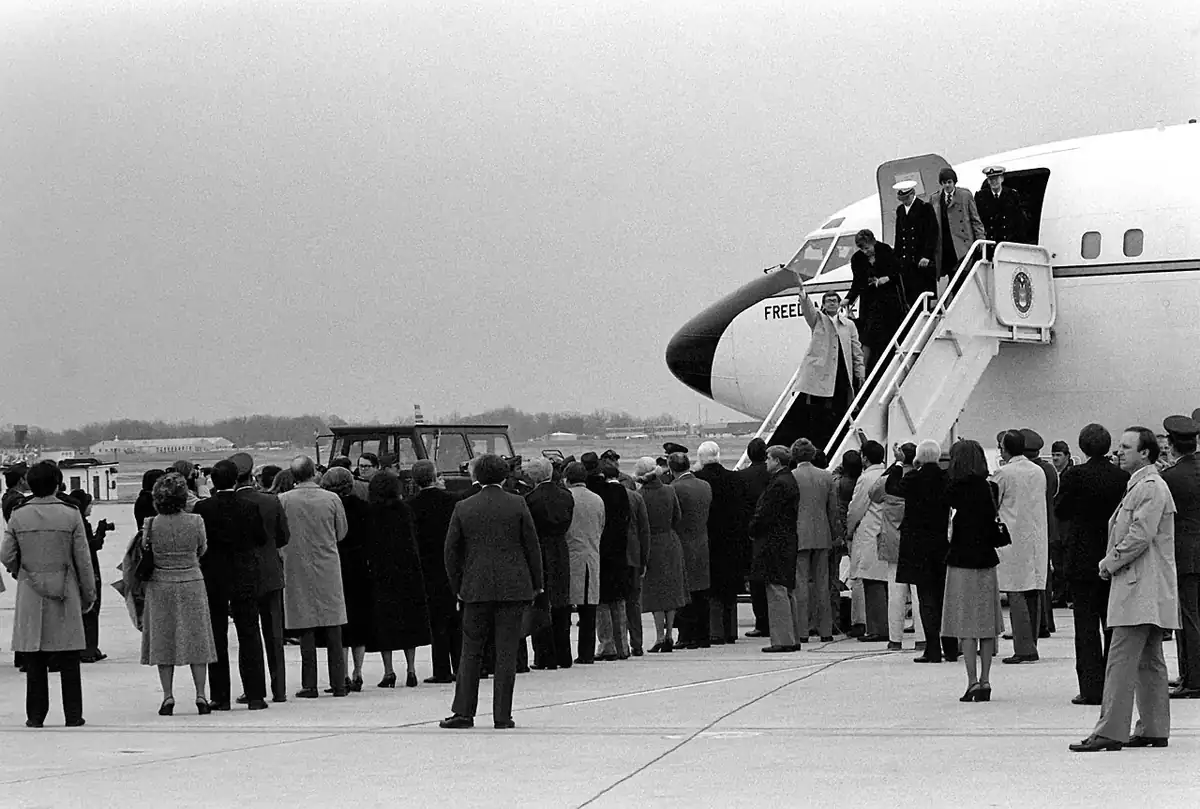
After the ailing Shah was admitted to the U.S. for medical treatment, students seized the U.S. Embassy in Tehran on Nov. 4, 1979, with the new government’s approval, and held Americans hostage for 444 days, until Jan. 20, 1981. The U.S. cut diplomatic ties on April 7, 1980. The two countries have had no formal relations since. U.S. leaders still invoke it. In 2020, President Trump said 52 Iranian sites he had threatened to strike represented “the 52 American hostages taken by Iran many years ago.”

Today’s echoThe current talks are indirect, with Pakistan and Qatar carrying messages. Pakistan’s army chief, Field Marshal Asim Munir, was in Tehran on Oct. 20–21.
The Tanker War
Iraq invaded Iran in 1980. In 1984, Iraq began attacking Iran’s oil export terminal at Kharg Island, and Iran retaliated against neutral ships carrying cargo to Kuwait. Much of that cargo was then shipped overland to Iraq.
To protect Kuwaiti oil, the U.S. registered 11 Kuwaiti tankers under the American flag so the Navy could legally defend them. The escort mission, Operation Earnest Will, ran from July 1987 to September 1988; the Navy calls it the largest naval convoy operation since World War II. On the first convoy, the reflagged tanker Bridgeton struck an Iranian mine.
Praying Mantis and Iran Air 655
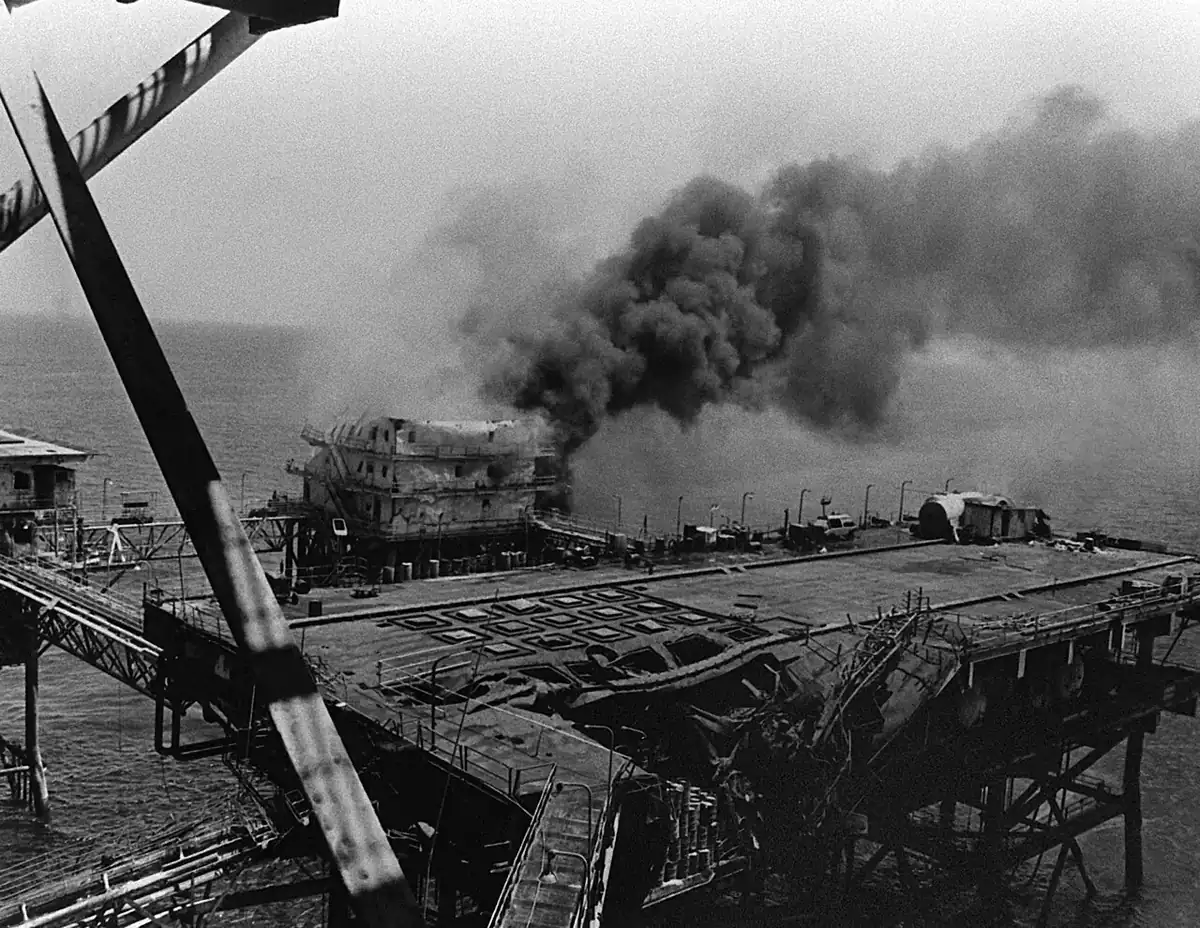
By late 1987, the escorts had brought the U.S. Navy into direct combat with Iran. On April 14, 1988, the frigate USS Samuel B. Roberts struck an Iranian mine. Four days later, the Navy launched Operation Praying Mantis. It destroyed two Iranian oil platforms that the Navy says were used as military posts, sank two Iranian ships and badly damaged a third.

On July 3, 1988, the cruiser USS Vincennes shot down Iran Air Flight 655, a civilian airliner, killing all 290 people aboard. The Navy says the crew mistook the jet for an Iranian fighter and calls the shootdown a “tragic accident.” Iran has called it deliberate. Iran’s government still points to the shootdown as a reason to distrust the United States. In 2003, the International Court of Justice, the UN’s top court, ruled that U.S. attacks on Iranian oil platforms in 1987 and 1988 could not be justified as self-defense, but it rejected Iran’s claim for reparations and a U.S. counterclaim.
The nuclear deal and its collapse
After 1988, the dispute shifted to Iran’s nuclear program. In 2015, Iran, the U.S., China, France, Germany, Russia, Britain and the European Union agreed to the . Iran accepted limits on its nuclear program, including a 3.67% cap on uranium enrichment, and nuclear-related sanctions were lifted in January 2016.
On May 8, 2018, Trump withdrew the U.S. from the deal, calling it “one of the worst and most one-sided transactions,” and reimposed sanctions, including on Iran’s oil. Iran then exceeded the deal’s limits.
In April 2021, days after an explosion that Iran blamed on Israel damaged its underground enrichment plant at Natanz, Iran began enriching uranium to 60%. The International Atomic Energy Agency (IAEA), the UN’s nuclear watchdog, confirmed the start on April 17. Weapons-grade uranium is about 90%. By May 17, 2025, the IAEA estimated, Iran held 408.6 kilograms of uranium enriched up to 60%, up by about half in three months. Reuters reported that this was enough, by an IAEA yardstick, for about nine bombs if enriched further.
Today’s echoRezaei said on Oct. 20 that “not a single gram of enriched uranium will be removed from Iran.”
The 12-day war
On June 13, 2025, Israel attacked Iran, and the two countries fought for 12 days. On June 21, the U.S. struck nuclear sites at Fordow, Natanz and Isfahan with 14 of its largest bunker-busting bombs. Initial U.S. assessments said the sites suffered “extremely severe damage.”
The Congressional Research Service called the status of Iran’s highly enriched uranium “uncertain,” and the IAEA has not been able to inspect the struck sites since. Iran canceled a sixth round of indirect talks with the U.S.
Today’s echoThis week, Vance described the U.S. goal as a “long-term” and “verifiable commitment” by Iran not to rebuild. Al Jazeera reads that as a possible softening.
Where things stand
Eight months after the 12-day war, the U.S. and Israel went to war with Iran. Since the June agreement collapsed, each side has used the strait as leverage: Iran by restricting passage, and the U.S. by blockading Iran’s ports and demanding nuclear limits. Iran wants the blockade and sanctions lifted first. The U.S. wants nuclear limits first.
What it means for your wallet
Gasoline prices have climbed since the war began. The national average for a gallon of regular was $4.28 in the week of Oct. 19, up from $2.94 in the week of Feb. 23. The Bureau of Labor Statistics, the federal agency that tracks , found gasoline up 34.2% over the year to September. Gasoline alone accounted for more than half of the 0.6% increase in consumer prices in September. Prices overall were up 3.7% from a year earlier, and 2.6% excluding food and energy. Airfares, which depend heavily on jet fuel, were up 22.4%.
The Federal Reserve, the U.S. central bank, aims for 2% inflation. When prices rise faster, it can raise the , its main interest rate, which makes borrowing more expensive and slows spending. On Sept. 16, the Fed raised the rate to a range of 3.75% to 4%, the first increase under its chair, Kevin Warsh. Credit-card rates usually rise soon after a Fed increase, because most cards are tied to the , which stood at 7% on Oct. 20. Mortgage rates track the , which was about 5.1% on Oct. 21. The average 30-year fixed mortgage rate was 7.40% on Oct. 15, according to Freddie Mac.
The last comparable oil shocks came in the 1970s. During the 1973 Arab-Israeli war, Arab oil producers imposed an embargo on the United States and cut production, nearly quadrupling the price of oil, from $2.90 a barrel to $11.65 by January 1974. Iran’s revolution then cut its oil output by 4.8 million barrels a day, about 7% of world production. Amid panic buying and strong demand, oil prices more than doubled between April 1979 and April 1980. Paul Volcker, who became Fed chair in August 1979, tightened the money supply so hard that the federal funds rate approached 20% in late 1980 and early 1981. By October 1982, inflation had fallen to about 5%, but the recession sent unemployment to 10.8% by the end of the year, its highest since World War II.
The Fed’s next rate decision is due Oct. 28. On Oct. 16, futures traders put the odds of a rate increase at that meeting at about 15%, CNBC reported.
What to watch
Oct. 27: Israel’s election. Trump has endorsed Israel’s prime minister, Benjamin Netanyahu, and said that if Israel picks anyone else, “America will have to do this work ourselves.”
Nov. 3: the U.S. midterms. The Financial Times reported that Trump opposed restarting the war before the vote, and Iranian officials told Reuters they see little chance of a deal before it. Al Jazeera, citing U.S. media, reports that Trump has told the military to prepare for larger attacks after the election.
More U.S. forces. Fox News, citing two U.S. officials, reported that a carrier group and a Marine unit would bring about 10,000 more personnel to the region by the end of November. The deployment has not been officially announced.
This is a developing story. The current-events sections reflect reporting available as of Oct. 21, 2026. Claims about the strait, ship attacks, blockade costs and casualties come from parties to the war unless marked as independent.
Sources
Today’s news
- U.S. Energy Information Administration: Amid regional conflict, the Strait of Hormuz remains critical oil chokepoint (June 16, 2025) ↩︎
- The National (Oct. 21, 2026): Araghchi on the strait, the talks and reported U.S. military plans ↩︎
- Congressional Research Service: U.S. Conflict with Iran (R48887), updated Sept. 18, 2026 ↩︎
- Reuters: US and Israel launch ‘pre-emptive’ attack against Iran (Feb. 28, 2026) ↩︎
- Fox News live blog (Oct. 19–20, 2026), citing IRNA and Reuters: the war, the talks and Israel’s election ↩︎
- Al Jazeera (Oct. 21, 2026): Iran’s enriched uranium in the U.S. talks ↩︎
- Statement on United States Military Operations in Iran (April 7, 2026), Daily Compilation of Presidential Documents ↩︎
- Al Jazeera (Oct. 17, 2026): the U.S. and Iran both claim control of the strait as ships are attacked ↩︎
- Fox News (Oct. 17, 2026): CENTCOM on ship transits and attacks in the strait ↩︎
- Reuters via The Business Standard (Oct. 19, 2026): Iran’s proposal to reopen the strait ↩︎
- Reuters via The Jerusalem Post (Oct. 11, 2026): Rezaei on the U.S. reply to Iran’s proposal ↩︎
- Reuters via CNA (Oct. 7, 2026): Vance on Iran’s enrichment ↩︎
- Gulf News (Oct. 20–21, 2026): Araghchi and Rezaei on Iran’s seven-day plan ↩︎
- U.S. Energy Information Administration: Weekly U.S. Regular All Formulations Retail Gasoline Prices (dollars per gallon), release of Oct. 20, 2026 ↩︎
- U.S. Bureau of Labor Statistics: Consumer Price Index, September 2026 (released Oct. 14, 2026) ↩︎
- Federal Reserve: FOMC statement (Sept. 16, 2026) ↩︎
- Reuters: Fed raises rates in search of 'timelier' drop in inflation (Sept. 16, 2026); Reuters live: first hike under Warsh ↩︎
- Consumer Financial Protection Bureau: The Consumer Credit Card Market, Report to Congress (December 2025) ↩︎
- Federal Reserve: H.15 Selected Interest Rates (Oct. 20, 2026 release) ↩︎
- CNBC: Treasury yields steady ahead of jobless claims and mortgage data (Oct. 21, 2026) ↩︎
- Freddie Mac: Primary Mortgage Market Survey (Oct. 15, 2026) ↩︎
- CNBC: Markets expect the Fed to hold rates in October. Kevin Warsh could surprise them (Oct. 16, 2026) ↩︎
The history
- U.S. State Department, Office of the Historian: Foreign Relations of the United States, 1951–1954, Iran, Document 9 (CIA Special Estimate SE-3, “The Current Crisis in Iran,” March 16, 1951) ↩︎
- U.S. State Department, Office of the Historian: Foreign Relations of the United States, 1952–1954, Vol. X, Iran, Document 15 (Editorial Note) ↩︎
- National Security Archive: “Zendebad, Shah!” The Central Intelligence Agency and the Fall of Iranian Prime Minister Mohammad Mossadeq, August 1953, by Scott A. Koch, CIA History Staff (1998; declassified 2017) ↩︎
- National Security Archive: CIA Confirms Role in 1953 Iran Coup, Electronic Briefing Book No. 435 (Aug. 19, 2013) ↩︎
- National Archives: 444 Days: Selected Records Concerning the Iran Hostage Crisis, 1979–1981 ↩︎
- U.S. State Department, Office of the Historian: Iran (country page) ↩︎
- NBC News: Trump threatens attacks on 52 Iranian sites (Jan. 2020) ↩︎
- Naval History and Heritage Command: H-Gram 018-1, “No Higher Honor: The Road to Operation Praying Mantis” (April 2018) ↩︎
- Naval History and Heritage Command: Operation Praying Mantis ↩︎
- Naval History and Heritage Command: H-Gram 020-1, the USS Vincennes tragedy ↩︎
- U.S. Institute of Peace, The Iran Primer: Timeline of U.S.-Iran naval encounters (Aug. 29, 2016) ↩︎
- AP via Arab News (2019): Iran marks 1988 U.S. downing of passenger jet ↩︎
- International Court of Justice: Oil Platforms (Islamic Republic of Iran v. United States of America), judgment of 2003 ↩︎
- U.S. State Department (2009–2017 archive): Joint Comprehensive Plan of Action ↩︎
- Reuters: IAEA confirms Iran has started enriching uranium to 60% purity (April 17, 2021) ↩︎
- White House (2017–2021 archive): President Donald J. Trump is Ending United States Participation in an Unacceptable Iran Deal (May 8, 2018) ↩︎
- Reuters: Iran to begin 60% uranium enrichment after nuclear site incident (April 13, 2021) ↩︎
- IAEA: GOV/INF/2021/28, verification of 60% enrichment at the Natanz Pilot Fuel Enrichment Plant (April 2021) ↩︎
- Reuters (May 31, 2025): the IAEA report and the “nine nuclear weapons” yardstick ↩︎
- IAEA: GOV/2025/24 (May 31, 2025) ↩︎
- Congressional Research Service: U.S. Strikes on Nuclear Sites in Iran (IN12571, June 23, 2025) ↩︎
- Federal Reserve: Statement on longer-run goals (Jan. 25, 2012) ↩︎
- Federal Reserve History: Oil Shock of 1973–74 and The Great Inflation ↩︎
- Federal Reserve History: Oil Shock of 1978–79 and Recession of 1981–82 ↩︎
- BLS: unemployment rate, series LNS14000000 and consumer price index, series CUUR0000SA0 (1981–82 values) ↩︎
Short on time? Get it in about 2 minutes.